
You may have already heard that there are some daring people out there who tape their mouths shut for a good night’s sleep.
-“What nonsense! People these days don’t know what to do with themselves anymore… Besides, it’s dangerous, I’d definitely suffocate.”
Comments like these pop up all over the internet. Let’s take a balanced look at the pros and cons of nighttime mouth taping, also known as Buteyko mouth tape.
Why do people use mouth tape at night?
By taping the mouth shut, people aim to ensure proper nasal breathing throughout sleep, a time when we can’t consciously monitor it ourselves. One common consequence of sleeping with an open mouth is snoring, which in my view is reason No. 1 why people reach for mouth tape. Companies selling mouth tape promise better sleep quality, more energy, a more defined face, and improved performance.
Research shows just how many advantages nasal breathing has over mouth breathing, yet many people still brush this off. What they don’t realize is that during a night of mouth breathing, a person loses 42% more water than a nose breather (1). Nor do they know that mouth breathing is one of the leading causes of tooth decay, since it dries out the oral mucosa and changes the composition of saliva, which negatively affects both the teeth and the gums. Dr. Mark Burhenne, a dentist, wrote a whole book on this subject, arguing that mouth breathing is even more harmful than eating sugar. Several experiments have been conducted on breathing through the mouth; one such account appears in James Nestor’s book Breath (2). The book describes how James and a fellow test subject deliberately blocked their noses to find out what it’s like to live and sleep as a mouth breather.
“Last night, the first time I deliberately slept with my nose blocked, my snoring increased by 1,300%(!!), totaling 75 minutes of the night. Olsson’s numbers were even worse: his snoring time rose from zero to four hours and ten minutes. On top of that, sleep apnea moments quadrupled. And all this within just 24 hours.” (p. 41)
So what exactly is sleep apnea, and why is it dangerous?
“Sleep apnea is a common but often underdiagnosed sleep disorder characterized by repeated interruptions in breathing during sleep. This condition not only worsens sleep quality but can also lead to serious long-term health complications. Symptoms of sleep apnea include loud snoring, nighttime shortness of breath, frequent awakenings, and daytime fatigue. An accurate diagnosis requires a detailed medical examination and specialized sleep studies, which make it possible to design an appropriate treatment plan and prevent long-term complications such as cardiovascular disease, diabetes, and neurological and cognitive problems.”
This is what we can read on the website of an ear, nose, and throat (ENT) center.
Nestor describes further changes in his book: his blood pressure rose by an average of thirteen percent, putting the author into Stage 1 hypertension. In the long run, this means a much higher risk of stroke, heart attack, and other serious conditions. His body became stressed (since mouth breathing equals stress and a heightened sympathetic nervous system tone), his heart rate increased, and his concentration suffered.
Although opinions are divided on the use of mouth tape when there are signs pointing to apnea, this research does suggest that mouth tape may have a place in certain degrees of sleep apnea. Personally, I always recommend a thorough investigation of the root cause, a sleep lab study, and an ENT examination, followed by breathing retraining — and in light of all that, we’ll have much better information about whether mouth tape is appropriate, and if so, from when and what type. Interestingly, dental sleep devices (anti-snoring devices/mandibular advancement devices) are said to be almost as effective as CPAP therapy, the gold standard for treating apnea, since many people don’t use the CPAP machine because it’s uncomfortable or noisy. In contrast, people are more willing to use an anti-snoring device (which is placed in the mouth), which then keeps the mouth closed during the night. A small aside: although CPAP devices are used, recommended, and supported almost everywhere for sleep apnea, certain dental procedures (such as palatal expansion) can be just as effective, or even more effective, than a CPAP machine. (3) The catch is that insurance doesn’t cover these procedures, even though palatal expansion itself brings about changes that generally increase breathing efficiency.
What problems can open-mouth sleeping cause?
- the risk of nighttime breathing pauses (sleep apnea) increases significantly
- apnea events prevent you from reaching deep sleep, which leads to constant fatigue, disrupts ghrelin levels (the hormone responsible for increasing appetite), and negatively affects sugar metabolism
- the oral mucosa dries out, which makes us get up to drink more often — and this leads to fragmented sleep
- fragmented sleep disrupts the sleep stages, robbing us of effective rest, recovery, and detoxification
- fragmented sleep prevents the brain’s lymphatic (glymphatic) system from clearing properly, which can increase the risk of developing Parkinson’s and Alzheimer’s disease
- fragmented sleep interferes with memory consolidation, the process by which information moves from short-term to long-term memory
- fragmented sleep is, in fact, a sleep disorder in itself
- pathogens attach more easily to dried-out mucous membranes, which means we get sick more often
- during mouth breathing, cold, unhumidified, dry air reaches the lungs
- in terms of nervous system function, mouth breathing triggers the fight-or-flight response, putting the body on high alert with survival as the goal, while support for rest takes a back seat
- during mouth breathing, the tongue can’t rest in its optimal position (against the roof of the mouth)
- with an open mouth, the tongue drops and gets in the way of breathing, and it can slide backward
- if the tongue isn’t in its proper position, the throat muscles also lose tone, which promotes apnea events
And I haven’t even mentioned nitric oxide gas yet. As you can see, this is a long list, and I still haven’t covered everything. If you’re curious, I’ll tell you the rest on the Buteyko course.
So should we really sleep with our mouths taped shut?
That depends. Companies that sell mouth tape recommend it to just about everyone. As a breathing coach, however, I’m far more cautious, because so many different things can be behind open-mouth sleeping! Tape is essentially a crutch — it doesn’t address the root cause, it simply covers it up nicely. It can help, but the real solution goes well beyond it.
For example, tape companies don’t talk about proper tongue posture, even though it plays a key role in supporting healthy nasal breathing. Tape alone won’t necessarily give us good breathing habits during the day, but it does at least support nasal breathing at night, which — if we count 8 hours of sleep — makes up about ⅓ of our day, so it’s quite significant! There are certain conditions in which mouth tape is not recommended, for example if you’re completely unable to breathe through your nose, if you’ve consumed alcohol, if you’re unwell, or if there’s a risk of sleep apnea. Ongoing shortness of breath, difficulty breathing, asthma, and panic attacks are also reasons for caution. Most people are afraid of mouth tape simply because they don’t have access to reliable, sufficient information.
How can I easily find out whether I'm capable of nasal breathing?
There’s a test called the water-retention test. The point of it is to make sure you can breathe through your nose for at least 3 minutes straight, meaning you won’t feel like you’re suffocating even with your mouth closed.
Here’s how to do it: put a glass of water in front of you, sit down on a chair, and take a sip of water into your mouth. It doesn’t need to be very much! What matters is that the water stays in your mouth for the full 3 minutes — don’t let it dribble out and don’t swallow it! During the test, pay attention to how easy or difficult nasal breathing feels. What is your breathing like? Slow or fast? Does your chest or your belly move more? Is it even, or are there bigger gasps? How hard or easy is it to keep your mouth closed? Do you need to press your lips together? Is it tiring? Does it feel strange? Okay, that’s enough for now, though there’s plenty more we could ask. Once you’ve done the test, spit out the water, and depending on your answers, we can go further. But which direction, and what does each answer mean? This is exactly the kind of situation where it helps to have a coach who can clearly explain the connections and, if needed, recommend further examinations.
If you decide to go with mouth tape, let's take a look at what's available!
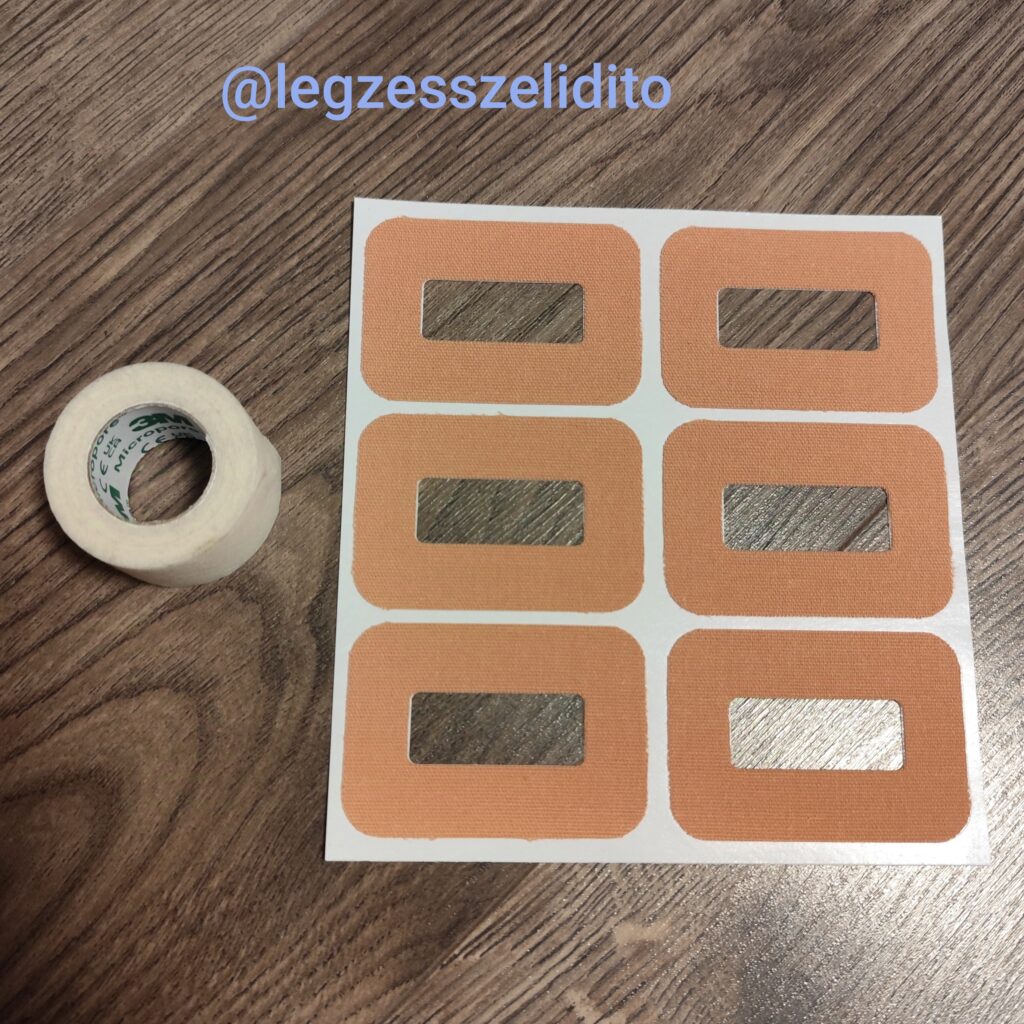
The white one is 3M’s hypoallergenic, paper-based Micropore tape, while the one with a hole in the middle is the MYOTAPE brand, which is placed around the mouth and comes in different sizes.
I don’t think I’ve ever come across this kind of classification anywhere else, but I generally divide mouth tapes into two categories: those that cover the mouth, and those that don’t.
Mouth-covering tape can either cover the lips completely, or in some versions it only needs to be applied vertically down the center, covering just a small area. These, then, cover the mouth partly or fully, preventing it from opening. Now for the more interesting type, the one that doesn’t cover the mouth at all — because it’s placed around the mouth instead. These are specially designed sleep tapes (Myotape), made of an elastic material, that need to be stretched slightly before being placed around the mouth. Thanks to the combination of pre-tension and elasticity, they gently try to hold the lips together. Because they don’t cover the lips, the mouth can still open in cases of forceful mouth breathing, and while awake we’re still able to talk or, say, drink with it on. So for anyone who’s a bit more hesitant, this can be a great solution.
How should you start using mouth tape at night?
We go through this in detail during Buteyko breathing training sessions, because it’s important to clear up any uncertainty or discomfort.
It’s important to make sure that using mouth tape isn’t contraindicated for you. To find this out, it’s worth turning to a breathing coach, who will (hopefully) refer you to other specialists and examinations if needed.
First, put it on during the day — for example while reading, watching TV, or on the phone — and get first-hand experience that you’re able to breathe through your nose and that you won’t suffocate. You might be smiling right now, but it really is important to experience these things for yourself. Just as it’s important to experience that you’re able to take the tape off yourself. All of this builds your sense of safety. Once you’ve tested it this way for a few days, continue by putting it on 15–30 minutes before sleep, so you get used to the feeling of wearing it and realize it’s not an enemy and everything is fine. Only after that should you move on to wearing it overnight. Generally, 1–2 weeks is enough for everyone to get used to it.
You can expect that during these 1–2 weeks you may wake up more often, your sleep may be temporarily more disrupted, and you might take the tape off in your sleep. If that happens, it simply won’t be on your mouth by morning. But don’t worry, it takes a little time to adjust. I’ve also had participants who slept through the entire night with the tape on the very first time they tried it, and the next day I’d get a message about how long it had been since they’d slept so restfully.
It’s also important to talk about the psychological side of using mouth tape, since for some people it can bring up a feeling of anxiety. These reactions are typically remnants of some earlier trauma, and they always need to be addressed — simply saying “don’t think about it, just do it” usually isn’t enough. Past negative experiences with choking, shortness of breath, panic attacks, and similar issues can make both mouth tape use and the regular practice of Buteyko breathing exercises more difficult. (These mental blocks are exactly why many people get stuck and give up on the practice. It’s precisely for situations like these that I came up with my “worth-their-weight-in-gold thoughts,” which have always helped the people who come to me push through.)
What if you can't use mouth tape,
or you're simply wary of it,
but you'd still like to guarantee the benefits of nasal breathing at night?
There are dentist-recommended anti-snoring devices that are placed inside the mouth and help keep the mouth closed. There are also methods like tying a scarf under your chin, or a specifically designed chin strap made for this purpose. These latter options might seem appealing at first, but they can affect the position of the jaw over the long term, which is why I don’t recommend them as much.
Consciously choosing your sleep position also matters — sleeping on your back is the worst option when it comes to the mouth falling open. It can be a particularly telling warning sign if someone sleeps with their head tilted back and their neck extended. This points to dysfunctional breathing (in children too!!).
Another way to encourage a closed-mouth resting position is proper tongue posture. In Hungary, this falls under the field of speech therapy, and speech therapists offer exercises that can strengthen the tongue, optimize swallowing, and help establish the correct resting tongue position both during the day and at night. Abroad, this is typically the domain of myofunctional therapists, who not only support the tongue with specialized exercises but also have a precise understanding of breathing, dental irregularities, and issues related to the tongue and lip ties. (I mention this because quite a few readers of my content are from abroad.) If you’re looking for such a therapist internationally, I recommend checking out the Airway Circle directory (4), where you can search for a specialist in any country. As a little spoiler, I’m currently the only member of this organization in Hungary, one of whose key goals is to foster cooperation and continuing professional education among specialists in breathing, sleep, and dentistry.
Another interesting option comes from Dr. Sandra Kahn, co-author of the book Jaws. She is a dentist behind a number of innovative approaches (Forwardontics). For sleep, she uses what’s called a Lip-locker, a flexible device placed inside the mouth. (5) This supports the tongue in forming a vacuum seal, which keeps the tongue up against the roof of the mouth.
Finally, Buteyko breathing exercises also go a long way toward supporting correct breathing and closed-mouth sleep.
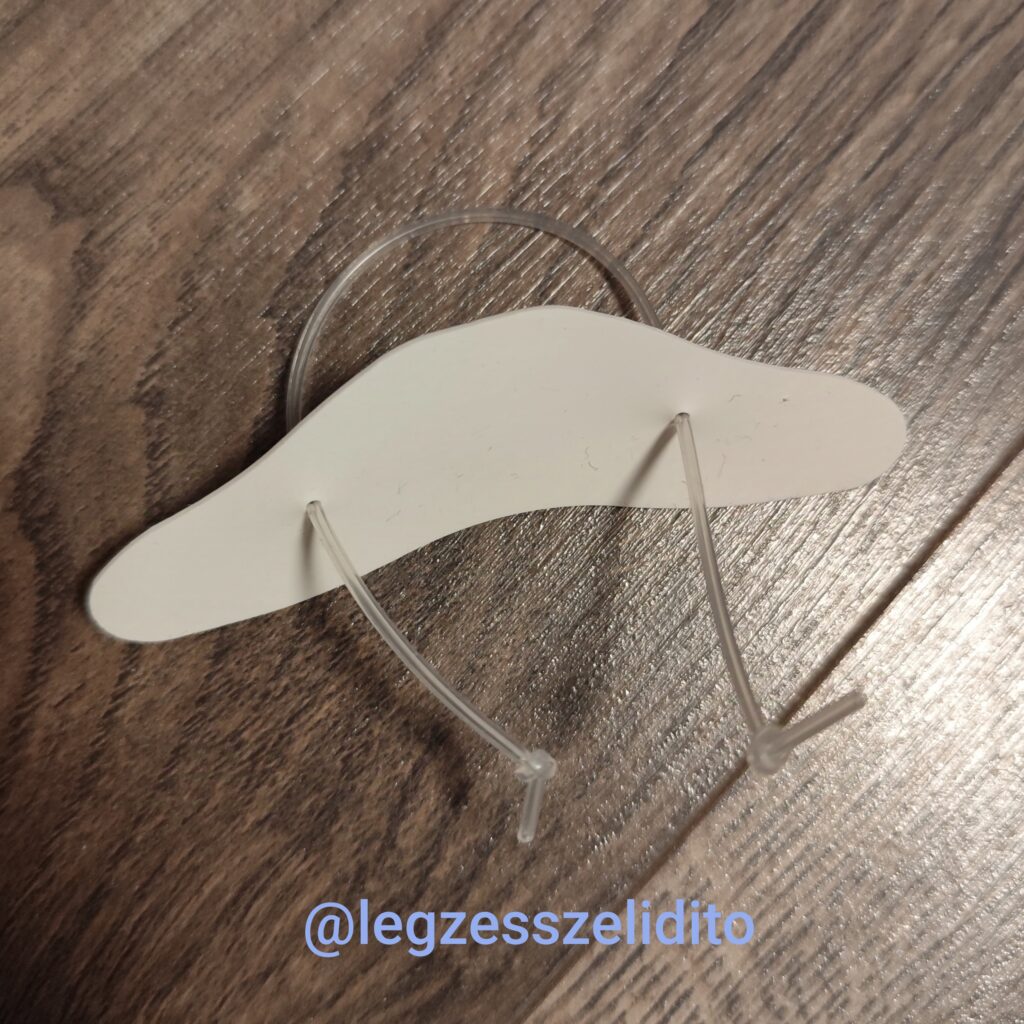
Lip-locker, developed by dentist Dr. Sandra Kahn — own photo
Summary
The topic of mouth taping might seem unusual at first, but supporting nasal breathing can significantly improve not only sleep quality but also overall health. As this article shows, mouth breathing can cause a wide range of problems — from snoring and tooth decay all the way to sleep apnea, which can pose a serious risk. Nighttime mouth tape can be a simple yet effective tool for promoting nasal breathing, but it isn’t right for everyone. That’s exactly why it’s important to first inform yourself, run the nasal-breathing self-check test, and seek professional help if needed.
Remember, mouth tape is just a crutch — the real solution lies in building proper breathing habits and eliminating any underlying causes. Correct tongue posture, mastering breathing technique, and lifestyle changes all contribute to healthy sleep habits. If you’d like to better understand how your breathing works and take a long-term step for your health, I invite you to join my Buteyko course, where you can learn every detail and receive personalized guidance.
The quality of your sleep and your breathing forms the foundation of your entire quality of life — do something about it today! 😊
1: https://pubmed.ncbi.nlm.nih.gov/16550955/
2: James Nestor: Breath, 2021
3: https://pubmed.ncbi.nlm.nih.gov/35102477/